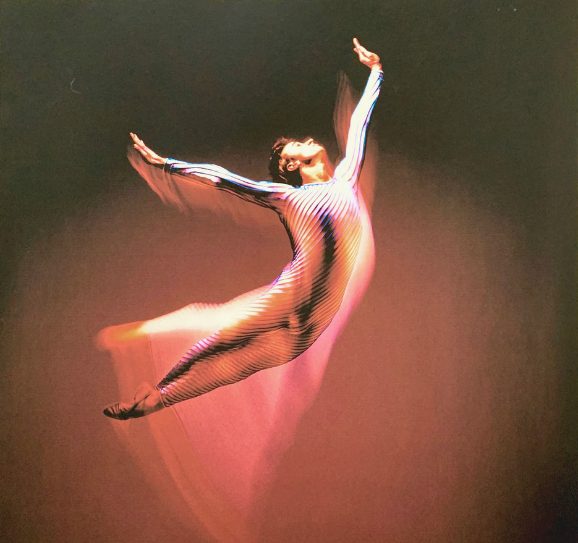
Ballet Ireland’s General Manager Martin Lindinger on athleticism, outdated myths, and what ballet still gets wrong. Photo of Lindinger in Visions Fugitives, choreographed by Hans van Manen, photo by Anthony Crickmay.
There are no second takes during a ballet. No edits, no do-overs, no safety nets. The technical mastery and physical honesty are revealed in real time, live and in person. It’s a rare aspect in today’s filtered and Photoshopped world, where even artificial intelligence can fool the sharpest eye when it comes across your social media feed.
But with ballet, “The raw, visceral risk of high-stakes athleticism unfolds live in the room with you,” says Martin Lindinger, Ballet Ireland’s General Manager since 2017. Lindinger is no stranger to the world of live performance: for twenty years, he danced professionally in London, Chicago, Toronto, and Vancouver. Now, he works closely with Ballet Ireland’s own company to ensure each production showcases the best Ireland has to offer when it comes to ballet.
Does a hundreds-of-years-old art-form still matter in 2026? The misconception that ballet is too expensive, too formal, or just unrelatable unfortunately still persists.
“I came into ballet as a working-class kid who went to the Royal Ballet School simply because I loved to move,” Lindinger continues. “Nothing about the art-form ever felt precious, delicate, or elitist. At its core, ballet is pure athleticism. It is one of the most physically relentless, uncompromising things you can ask of a human body. It was never created to exclude anyone or belong to a select few. That perception of snobbery was tacked on long after the fact by custom and institution, not by dance itself. The myth that ballet ‘isn’t for you’ keeps people from experiencing something powerful.”
THERE’S NO HOMEWORK NECESSARY
Pulling back the curtain on that myth also means revealing the other side of it– the audiences’ hesitation that they won’t understand what they’re watching. Too many nowadays still think they have to prepare and do homework in order to enjoy the ballet, when the opposite is true.
“Contemporary dance, for instance, is constantly inventing its own individual vocabularies, something I deeply love and respect after years of working in major contemporary companies worldwide,” says Lindinger. “But ballet relies on a shared, centuries-old foundation of technique. Because of that rigorous training, an audience can watch a specific lift, a tilt, or a turn and instinctively decode the emotion and narrative behind it. They read the weight of the moment instantly through the clarity of the technique, without needing a programme note to explain it to them first.”
It’s something to keep in mind before you take your seat. Each step has a name, and the dancers have spent their lives learning and perfecting them, but none of that is required of an audience member. The technique is there to make the meaning of dance legible. It’s the reason you understand the drama of Swan Lake through Odette’s mournful movements versus Odile’s fierce fouettés, and the longing and love between Romeo and Juliet during their iconic balcony pas de deux. For an entire evening, audiences witness a story unfolding without any dialogue, and they’re able to follow it purely through the physical expression of dance.
THE BIGGEST CHANGE IN AUDIENCES OVER THE YEARS
That combination of shared language and real physicality is what will keep the form alive. And what has shifted, in Lindinger’s experience, is who turns up to witness it.
“Since joining Ballet Ireland in 2015, I’ve seen a genuine shift, especially among younger audiences, toward taking a chance on something new,” he says. “It’s a spirit we actively strive for as a company. I love arriving at the theatre early to ‘crowd watch,’ not just at our own performances, but with any company’s audience. Standing at the back of the house over the years gives you a real feel for the room and its demographics, both before and after a show. Seeing that shift has been one of the most encouraging parts of my time here.”
But that doesn’t mean the ticket sells itself. If anything, Lindinger notes, audiences are more deliberate than they used to be about how they spend an evening.
“A story people already half-know, told well, is still the most reliable reason someone buys a first ticket,” he says. “But what turns a curious first-timer into someone who comes back is almost always the quality of the performance, whether that’s the production itself or the standard of the dancers performing it. What’s changed is patience. People weigh a night out more carefully than they used to, so the work of proving it’s worth their evening now happens well before the curtain goes up, not just on the night itself.”
Meeting that standard is where ballet as a broader art-form has been the slowest to evolve. Not in its technique or production, and certainly not in its audiences, but in its appetite for risk.
WHERE BALLET HAS ROOM TO GROW
“Where ballet is slowest to change is in who gets trusted to create new work, and how much risk a company is actually willing to carry to back them,” he continues. “It’s always easier and safer for the immediate box office to programme another Nutcracker than to commission something unproven. Commissioning requires serious financial investment, and unlike a private rehearsal process, if a new piece misses the mark, it fails very publicly. That institutional caution and fear of failure slows the art-form down more than anything else.”
And the cost of that caution, he notes, can land on the audience. “When an audience is only ever shown the same handful of nineteenth-century classics, they eventually stop believing ballet has anything relevant or new to say about contemporary life.” It’s the approach behind Bold Moves, Ballet Ireland’s own annual production of new and contemporary work, which he describes as an ongoing responsibility as opposed to a one-off gesture. The company has found audiences are eager for new voices. The work now is meeting and exceeding expectations for high calibre work season after season.
WHAT’S NEXT FOR BALLET IRELAND
The same conviction is shaping what he wants the company to be known for as its 30th anniversary approaches in 2028. Ballet Ireland was the first company to bring choreographic heavyweights including Aszure Barton, Johan Inger, Christopher Bruce, and Marguerite Donlon to Dublin stages. Lindinger frames this less as importing international talent than as proof to local audiences that they deserve access to the very best contemporary ballet and dance has to offer, brought directly to their doorstep.
For a company that tours island-wide as well, that access brings an obligation with it. “Arriving for one night, dropping off a printed programme, and driving away isn’t touring,” he says. “What we owe people is continuity. We want to be a company they actually know and trust, so when we come to town, they know it’s going to be completely worth their evening.” What he hopes the next thirty years looks like is that balance held steady. High-calibre work in every corner of the country. Homegrown dancers. Bold new commissions. All of it grounded in the rigour and depth of ballet technique.
And for anyone still hesitating over purchasing a ticket, his advice is to bring nothing at all.
“Just watch it, without a synopsis, without knowing the names of the steps, without any preparation at all. A body moving with mastery reaches you directly, in the exact same way a great piece of music does. Just come as you are, take your seat, and let it land on you. That is genuinely all that ballet asks of you.”
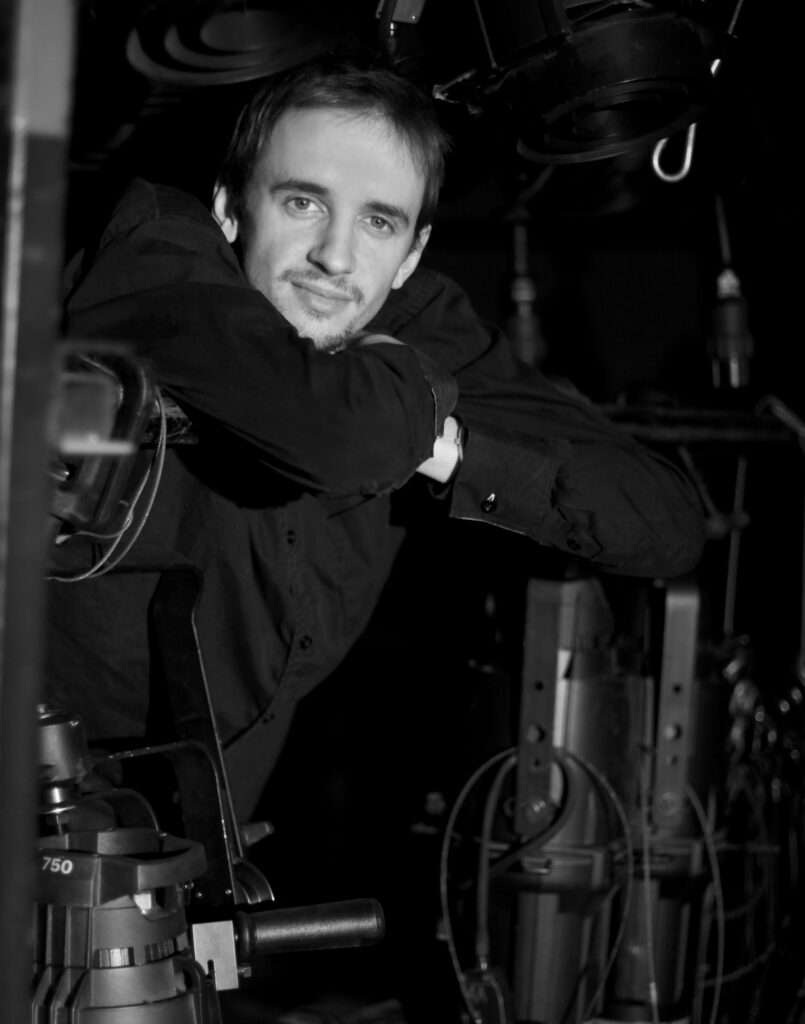
Martin Lindinger trained at the Royal Ballet School and spent more than twenty years dancing with companies including Rambert, Hubbard Street Dance Chicago, The National Ballet of Canada and Ballet BC, winning the UK Critics’ Circle National Dance Award for Outstanding Male Artist (Modern) in 2003. He joined Ballet Ireland as Rehearsal Director in 2015 and has been General Manager since 2017.